






What Is an Abdominal Ultrasound ?
Abdominal ultrasound (ultrasound scanning) is a diagnostic imaging technique that uses high-frequency sound waves to create images of internal organs. It can help doctors identify abnormalities and support the diagnosis of various conditions. An abdominal ultrasound is generally painless and non-invasive. The ultrasound probe is moved over the skin of the abdomen, without the need for anesthesia or injections. The sound waves used are considered safe and do not expose patients to ionizing radiation.
Why Is an Abdominal Ultrasound Recommended?
For general health screening: To evaluate abdominal organs according to age or as part of a routine health check-up and detect abnormalities before symptoms appear, such as kidney stones, gallstones, or liver masses.
To evaluate suspected abdominal masses: Ultrasound can help determine which organ a mass may originate from and whether it appears to be a solid mass or a fluid-filled cyst.
To investigate abdominal symptoms: It may be recommended for people with persistent or recurrent abdominal pain, pressure, or discomfort, enlarged abdominal organs, or abnormal liver function test results.
To guide procedures: Ultrasound can be used to guide certain procedures, such as obtaining tissue samples from deeper areas of the body, helping improve procedural accuracy.
For follow-up monitoring: Ultrasound can be repeated to monitor previously identified abnormalities, assess treatment results, or observe changes over time.
What Is the Difference Between Upper and Lower Abdominal Ultrasound?
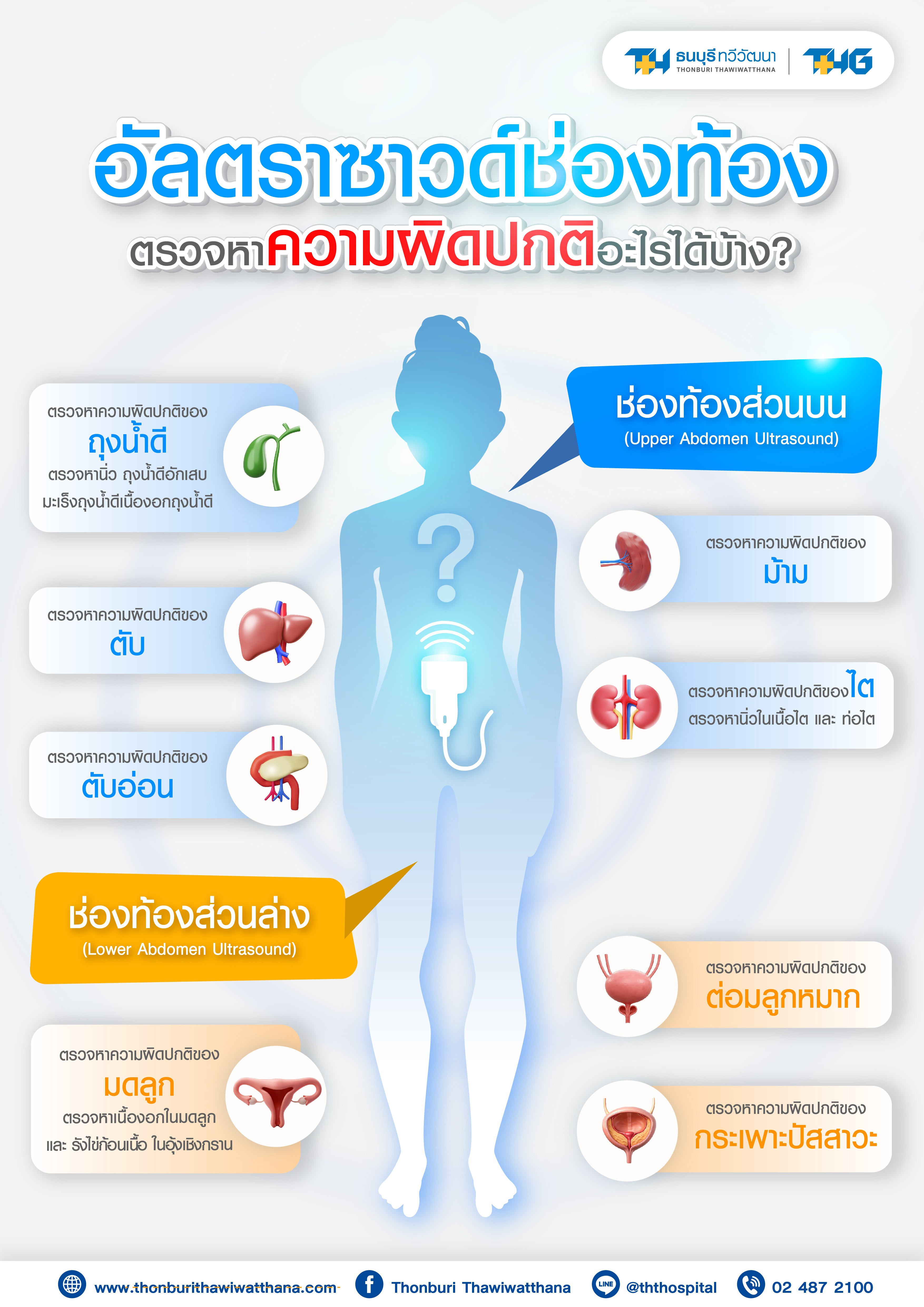
Upper Abdominal Ultrasound
An upper abdominal ultrasound can be used to evaluate:
Gallbladder: Gallstones, inflammation, masses, and other abnormalities
Liver: Liver masses and other structural abnormalities
Pancreas: Structural abnormalities and masses
Spleen: Enlargement and other abnormalities
Kidneys: Kidney stones and other abnormalities of the kidneys and urinary tract
Lower Abdominal Ultrasound
A lower abdominal ultrasound can be used to evaluate:
Uterus and ovaries: Uterine fibroids, ovarian masses, and other pelvic abnormalities
Prostate: Prostate enlargement and other abnormalities
Urinary bladder: Structural abnormalities and other conditions affecting the bladder
How to Prepare for an Abdominal Ultrasound
Upper abdominal ultrasound: Avoid food and beverages for approximately 6 hours before the examination, according to your healthcare provider’s instructions.
Lower abdominal ultrasound: You may be asked to drink plenty of water and hold your urine before the examination. A full bladder can provide a clearer view of the pelvic organs.
If you are having only a lower abdominal ultrasound, fasting is generally not required. However, if you are having an upper abdominal ultrasound at the same time, fasting instructions will apply.
Who Should Consider an Abdominal Ultrasound?
An abdominal ultrasound may be appropriate for:
Adults aged 30 and above, both men and women, particularly as part of a routine health check-up when recommended by a healthcare professional
People with chronic or recurrent abdominal pain
People experiencing digestive symptoms such as bloating, abdominal discomfort, indigestion, or changes in bowel habits
Women experiencing severe menstrual pain, heavy or irregular periods, or a palpable mass in the lower abdomen
People experiencing abnormal urination or urinary symptoms
What Happens During an Abdominal Ultrasound?
The examination is performed by a healthcare professional. You will be asked to lie on an examination bed. The doctor or sonographer will apply a cool ultrasound gel to the area being examined to help transmit sound waves from the probe through the skin. During the examination, the ultrasound probe is gently pressed against the skin and moved across the area being examined. The images of the internal organs can be viewed on the ultrasound monitor during the examination.The procedure typically takes approximately 10 – 45 minutes, depending on the organs being examined and whether any abnormalities require further evaluation.
Benefits of Abdominal Ultrasound
Useful for screening and evaluating abdominal organs, helping identify certain abnormalities at an early stage
Painless and non-invasive
No ionizing radiation
Relatively simple preparation
Generally no recovery period or complications after the examination
Note: The specific organs that can be assessed and the preparation required may vary depending on the type of ultrasound and the individual patient. Your healthcare provider will provide specific instructions before the examination.