




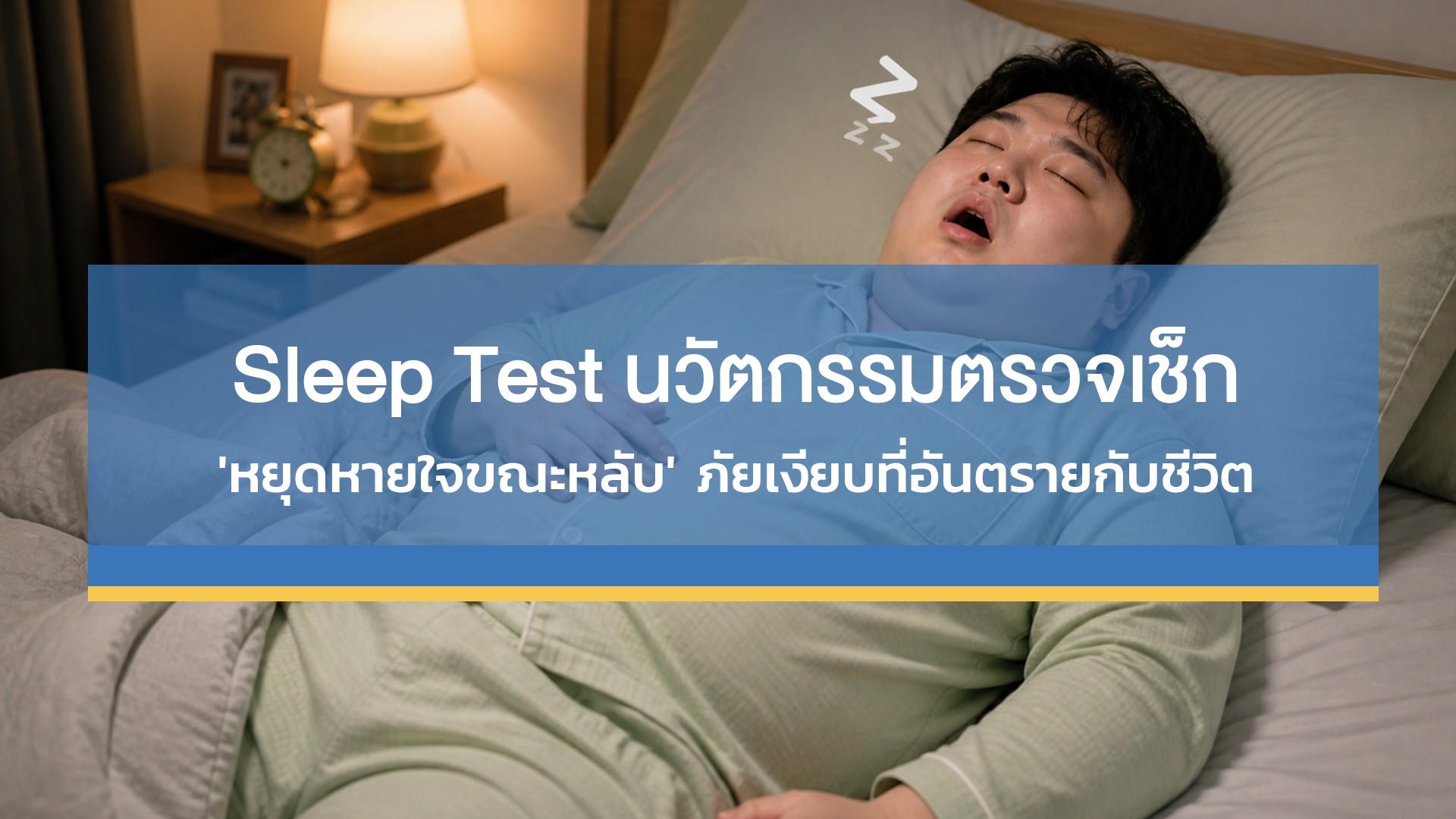
Sleep Test (Polysomnography) is a comprehensive examination that records various physiological activities while you sleep. It is used to diagnose sleep disorders, such as obstructive sleep apnea (OSA). The test monitors brain waves, blood oxygen levels, heart rate, and breathing patterns, helping doctors identify the underlying causes of sleep problems and determine appropriate treatment. Early detection and treatment can help reduce the risk of cardiovascular disease, high blood pressure, and stroke in the future.
People with severe sleep apnea have up to a threefold higher risk of coronary artery disease. Approximately 25% of men and 10% of women may have undiagnosed sleep apnea without being aware of it. This highlights how important good-quality sleep is to your overall health and quality of life.
5 Critical Warning Signs That You Should Have a Sleep Test Immediately
If you experience even two of these symptoms, you are advised to consult a doctor promptly.
Very loud snoring accompanied by gasping : You may sound as though you are choking or briefly stop breathing during sleep.
Excessive daytime sleepiness : Even after getting enough hours of sleep, you still feel exhausted as if you have not slept at all.
Sudden awakening during the night : You may wake up gasping for air or urinate unusually frequently. This can occur because the heart is working harder, triggering the release of hormones that increase urine production.
Morning headaches : These may be associated with increased carbon dioxide levels in the blood during sleep and poor-quality sleep.
Dry or sore throat upon waking : This can result from breathing through the mouth while sleeping.
Who Is at Higher Risk of OSA ?
People who have any of the following conditions in addition to the warning signs above should be particularly vigilant, as they may have a higher risk of obstructive sleep apnea (OSA):
People with an above-standard BMI, large waist circumference, or thick neck: For Thai adults, a BMI of 23 or higher and a waist circumference exceeding 90 cm in men or 80 cm in women are considered above the recommended standard and may be important risk factors for sleep apnea. Excess fat around the neck and upper airway can contribute to airway obstruction during sleep.
People with chronic non-communicable diseases (NCDs): Such as difficult-to-control high blood pressure, diabetes, or heart disease.
People with certain facial or upper-airway anatomical features: Such as a short or recessed chin or enlarged tonsils that may obstruct the airway.
What Does a Sleep Test Measure? How Is It Different from Normal Sleep?
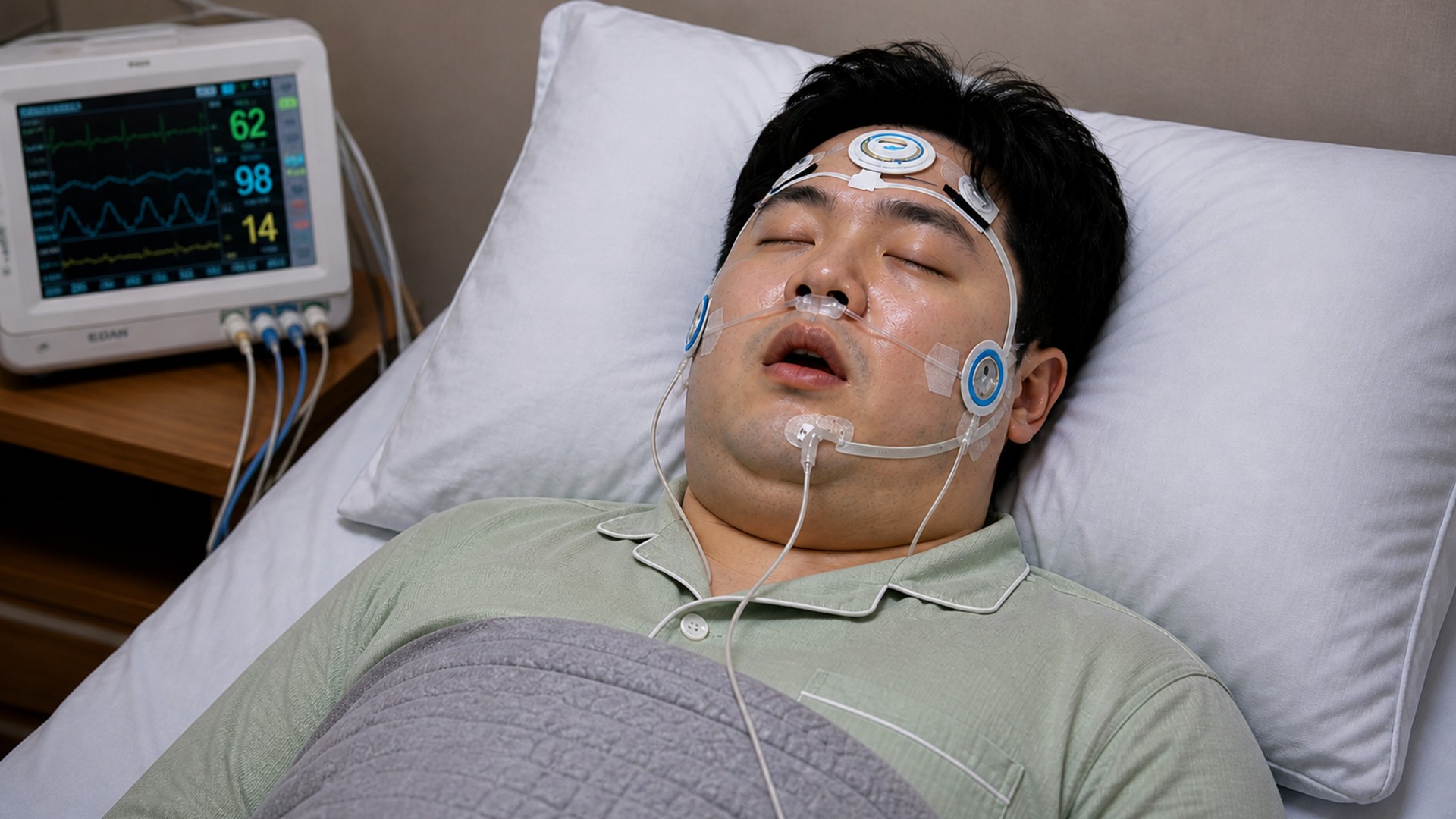
During a Sleep Test, a specialized technician attaches monitoring equipment to different parts of the body to collect data from four main areas:
Brain activity : To determine the depth and stages of sleep.
Respiratory system : To monitor breathing patterns, assess sleep stages, detect sleep apnea, and evaluate oxygen levels during sleep.
Blood oxygen levels : To determine how frequently and how significantly oxygen levels drop during sleep.
Sleep behaviors : To monitor leg movements and abnormal behaviors such as sleep talking or other unusual movements during sleep.
How to Read Your Sleep Test Results
The report may initially look like a complicated collection of graphs and numbers. However, there are several key measurements doctors use to determine whether you are sleeping well or experiencing sleep apnea.
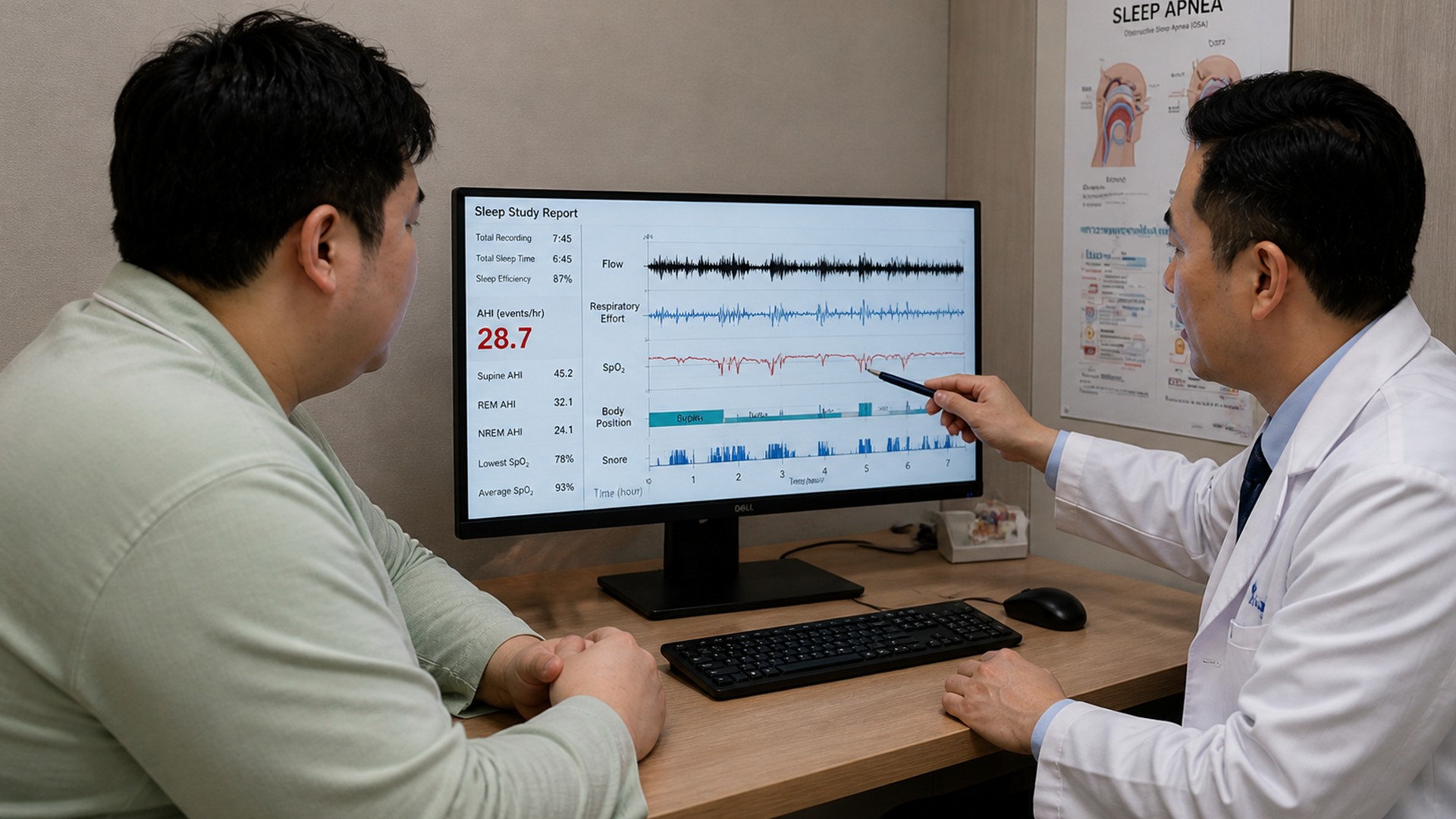
1. AHI (Apnea-Hypopnea Index) – The Sleep Apnea Index
This is one of the most important values in a Sleep Test report. It indicates the average number of times per hour that you stop breathing or experience significantly reduced breathing.
Normal (0–5 events/hour): Generally considered within the normal range.
Mild (5–15 events/hour): Some degree of airway obstruction is present.
Moderate (15–30 events/hour): Sleep disruption may become more significant and may be associated with increased blood pressure.
Severe (more than 30 events/hour): Repeated breathing interruptions and oxygen drops can place significant stress on the body and require prompt medical evaluation and treatment.
2. Oxygen Desaturation – Blood Oxygen Levels
This measurement shows how much your blood oxygen level drops during episodes of reduced or interrupted breathing.
Normal oxygen saturation: Generally around 95–100% in healthy individuals at sea level, although values can vary.
Below 90%: May indicate clinically significant oxygen desaturation and should be evaluated by a healthcare professional. The lower and more frequently the oxygen level drops, the greater the potential concern.
3. Sleep Architecture – Your Sleep Cycle
This measurement shows the different stages of sleep and whether you are getting sufficient restorative sleep. These stages include:
Light Sleep: The lighter stages of sleep.
Deep Sleep: The stage associated with physical restoration and recovery.
REM Sleep: The stage associated with dreaming and important processes related to memory and brain function.
People with sleep apnea may experience fragmented sleep: When they begin entering deeper stages of sleep, breathing interruptions can trigger brief awakenings, preventing them from maintaining restorative sleep. As a result, they may wake up feeling tired even after spending many hours in bed.
4. Snoring & Heart Rate – Monitoring Snoring and Heart Rate
Snoring: The test records the presence and intensity of snoring and may help identify which sleeping positions are associated with more severe snoring, such as heavier snoring when lying on the back.
Heart Rate: The test monitors changes in heart rate that may occur during breathing interruptions, including increases in heart rate as the body responds to reduced oxygen levels.
To put it simply, one of the easiest ways to interpret a Sleep Test is to look at the AHI (Apnea-Hypopnea Index), which indicates the number of breathing interruptions per hour. If the AHI is higher than 15 and blood oxygen levels drop below 90%, this may indicate a higher risk of cardiovascular and cerebrovascular complications. Doctors will select the most appropriate treatment based on the severity of the condition, the patient’s age, underlying medical conditions, lifestyle, and individual expectations. For patients with more severe sleep apnea, doctors often recommend Continuous Positive Airway Pressure (CPAP) therapy. CPAP helps keep the airway open, allowing patients to maintain more continuous, restorative sleep and receive adequate oxygen throughout the night.
Thonburi Thawiwatthana Hospital is committed to providing comprehensive sleep health care. Our Sleep Test service is designed to provide a comfortable, hotel-like environment, helping patients feel relaxed and allowing them to sleep as naturally as possible so that the collected data accurately reflects their usual sleep patterns.
Here are 5 simple steps to help you understand why a Sleep Test is more comfortable and less intimidating than you may think:
When you arrive at the hospital, you will be welcomed into a private room designed with a warm atmosphere, soft lighting, and a comfortable bed that feels more like home or a quality hotel. The environment is designed to help you relax and prepare for a good night's sleep.
2. Get Ready for Your Sleep Test
You can take a shower and wear your favorite pajamas that you bring from home. A specialized Sleep Technician will then attach small monitoring sensors to various parts of your body, such as the scalp, face, chest, and legs.
There is no need to worry. The equipment consists of external sensors and does not involve blood sampling or painful procedures. The cables are designed to provide enough flexibility for you to turn and change positions comfortably during the night.
3. Sleep Naturally and Comfortably
Once the lights are turned off, you can sleep as you normally would. You may listen to soft music or read a book before going to sleep. A technician will monitor you from a control room using a monitoring system.
If you need to use the bathroom during the night or if any sensor becomes loose, simply press the call button. A staff member will come to assist you promptly, so you can remain comfortable without having to manage the equipment yourself.
4. Wake Up and Start Your Day
In the morning, the technician will gently remove the monitoring equipment. You can then shower, get dressed, and continue with your work or daily activities.
5. Receive Your Results from a Sleep Specialist
The sleep data recorded throughout the night—including breathing patterns, oxygen levels, heart rate, and sleep stages—will be analyzed by a physician specializing in sleep medicine.
The results will help evaluate your sleep quality, identify any underlying sleep disorders, and develop an appropriate treatment plan tailored to your individual needs—helping you achieve better sleep and a better quality of life with confidence.