




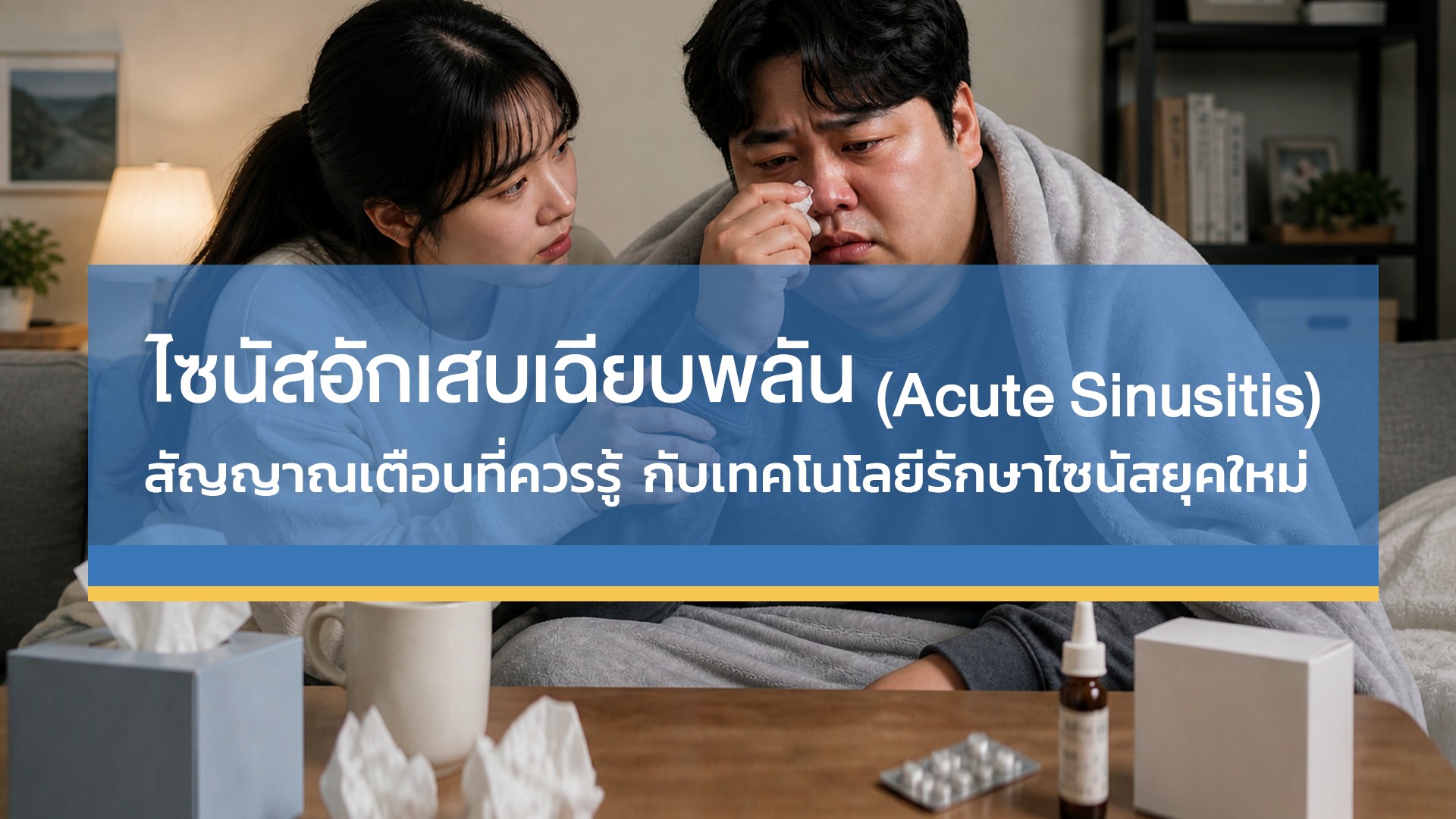
Acute sinusitis is a rapid inflammation of the lining of the paranasal sinuses, typically lasting no more than four weeks. It often develops following a common cold or allergies. Key symptoms to watch for include thick, cloudy yellow or green nasal discharge, facial pressure or pain around the cheeks, and a reduced sense of smell. Early and appropriate treatment, including antibiotics when indicated and proper nasal irrigation, may help prevent the condition from becoming chronic and potentially requiring surgery in the future.
Acute sinusitis may be caused by a bacterial infection. More than 70% of patients may initially begin to feel better during a common cold, only to experience a sudden worsening of symptoms around days 5–7. This can be a warning sign of acute sinusitis. With proper diagnosis and appropriate treatment, more than 90% of patients can recover with medication alone, without requiring an invasive procedure.
Who Is Most at Risk of Recurrent Sinusitis?
People with Allergic Rhinitis: Swollen nasal passages can obstruct the drainage of mucus from the sinuses, increasing the risk of sinus inflammation and infection.
People with Abnormal Nasal Anatomy: Structural issues such as a deviated nasal septum or small nasal polyps may interfere with normal sinus drainage.
Smokers and People Exposed to Air Pollution: Cigarette smoke, dust, and PM2.5 can damage the tiny hair-like structures called cilia in the nasal passages, which help clear mucus, allergens, and pathogens.
Young School-Aged Children: Their immune systems are still developing, and frequent exposure to colds and respiratory infections at school can increase the risk of sinus problems.
What Causes Acute Sinusitis?
The main cause of acute sinusitis is infection, with viruses being the most common cause. A secondary bacterial infection may develop when swelling inside the nasal passages blocks the sinus openings, preventing normal mucus drainage. Trapped mucus can then create an environment where bacteria can multiply, leading to inflammation and infection.
Common contributing factors and warning signs include:
A Prolonged Cold: It may begin as a common cold with clear nasal discharge, but instead of improving within 5–7 days, symptoms persist and the mucus may become cloudy white, yellow, or green.
Worsening Nasal Congestion: The nose may feel constantly blocked, making it difficult to breathe through the nose and sometimes causing a nasal or “stuffy” voice.
Facial Pressure or Pain: A feeling of pressure, heaviness, or aching may develop around the eyes, cheeks, or forehead. The discomfort may become more noticeable when bending forward or changing position quickly.
Persistent Postnasal Drip: Mucus draining down the throat may cause throat irritation and frequent throat clearing, particularly in the morning after mucus has accumulated overnight.
Changes in Taste and Smell: Food may seem less flavorful, or the ability to detect and identify smells may become reduced.

The Early Symptoms of Sinusitis often develop following a prolonged cold or allergic rhinitis, with nasal congestion lasting more than 10 days and accompanied by facial pressure or pain.
The likelihood of recurrent sinusitis depends largely on how well the underlying triggers are managed—particularly controlling allergies and maintaining regular nasal irrigation. Consistent nasal care can help keep the nasal passages clear, support normal mucus drainage, and reduce the risk of recurrent inflammation.
Warning Signs: When Is It More Than Just a Common Cold?
If your symptoms persist for more than 10 days or you develop any of the following more severe symptoms, you should consult a doctor:
Thick Yellow or Green Nasal Discharge: Persistent thick yellow or green mucus throughout the day, rather than only upon waking.
Localized Facial Pain or Pressure: Pain or pressure around the inner corners of the eyes, cheeks, or forehead, which may become worse when bending your head forward.
High Fever: Fever may occur together with facial pain or pressure and thick, cloudy nasal discharge.
Bad Breath: An unpleasant odor may develop when infected mucus or pus drains down the throat or remains trapped in the nasal passages.
Targeted Treatment to Relieve Symptoms: Effective Treatment Options and Advanced Technology
Today, acute sinusitis can be managed with a range of targeted treatments and diagnostic technologies designed to identify the underlying cause and help patients feel more comfortable.
Antibiotics: Doctors may prescribe antibiotics when a bacterial infection is suspected or confirmed. Antibiotics are not needed for most viral sinus infections.
Nasal Steroids: These medications help reduce inflammation and swelling of the nasal lining, which may improve sinus drainage and relieve nasal congestion.
Saline Nasal Irrigation: Proper nasal irrigation with saline can help wash away thick mucus, allergens, and irritants from the nasal passages, supporting clearer nasal airways and normal mucus drainage.
In-Depth Diagnostic Evaluation: If symptoms are persistent, severe, or unclear, a doctor may perform nasal endoscopy using a small camera to examine the nasal passages and sinus openings. This allows the doctor to identify areas of inflammation or obstruction and tailor treatment more precisely.

The key to treating acute sinusitis is restoring normal sinus drainage and allowing mucus to flow out naturally. Appropriate medical treatment, combined with regular nasal irrigation, can help reduce inflammation, improve mucus drainage, and support the nasal lining as it returns to normal function, typically within 7–14 days.
Most importantly, do not purchase or take antibiotics without consulting a doctor. Unnecessary or inappropriate antibiotic use can contribute to antibiotic resistance and may make future infections more difficult to treat. If sinus symptoms persist or recur, proper medical evaluation is recommended to prevent the condition from becoming chronic and requiring longer-term treatment.
Self-Care Tips to Support Recovery
Before Treatment:
Get plenty of rest and drink warm fluids to help keep mucus thinner and easier to clear.
Monitor and record your symptoms, including the color of your nasal discharge and the location of facial pain, so you can provide your doctor with accurate information.
Avoid exposure to dust, cigarette smoke, and extremely cold air, which may worsen nasal irritation and inflammation.
Take your medications as prescribed: If antibiotics are prescribed by your doctor, take them exactly as directed. Do not stop or change the medication on your own, even if you start to feel better.
Perform nasal irrigation properly: Regular saline nasal irrigation may help clear mucus and support normal nasal drainage. Follow your doctor’s recommended frequency and technique.
Follow up as recommended: If your symptoms do not improve within 3–5 days after starting treatment, or if you develop eye pain or swelling around the eyes, seek medical attention promptly.
The 10-Day Rule: Distinguishing a Common Cold from Sinusitis
If nasal congestion, facial pain or pressure, or thick nasal discharge does not improve after 10 days, or if symptoms suddenly worsen around days 5–6 after a cold initially starts to improve, acute sinusitis may be suspected and medical evaluation is recommended.
Warning Signs: Seek Immediate Medical Attention
Acute sinusitis can, in rare cases, spread to surrounding tissues. Seek immediate medical attention if you experience:
Redness or swelling around the eyes, or double vision
Severe headache accompanied by a stiff neck or difficulty bending the neck
Persistent high fever accompanied by unusual drowsiness or a worsening general condition
Thonburi Thawiwatthana Hospital is committed to providing comprehensive care for patients with sinus and other ENT conditions. Our Ear, Nose and Throat (ENT) specialist team provides expert evaluation and treatment, with access to advanced RF (Radiofrequency) technology featuring precise energy control to help minimize the impact on surrounding tissues.A detailed diagnostic evaluation is performed before treatment to determine whether RF treatment is appropriate for your condition.Our goal is not simply to treat the disease, but to design a personalized treatment approach that best fits your lifestyle and individual needs.