



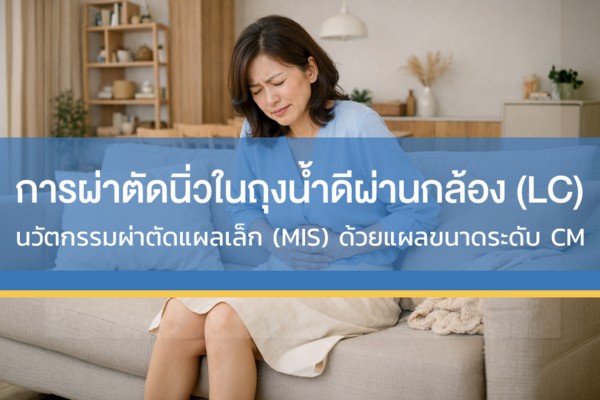
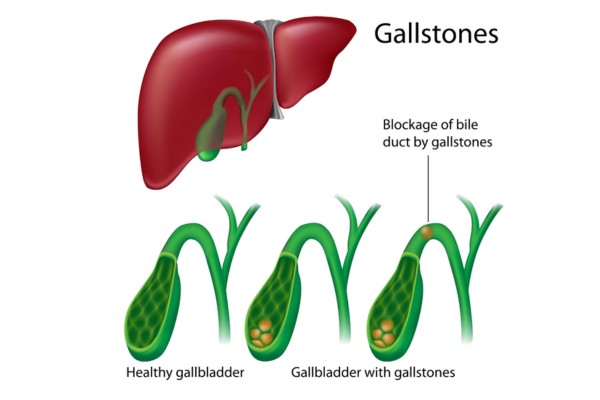
Laparoscopic Cholecystectomy is a minimally invasive surgical procedure used to remove the gallbladder in patients with gallstones. Instead of a traditional open surgery, this technique utilizes Minimally Invasive Surgery (MIS) through small incisions measuring only 0.5–1.2 cm. The procedure offers several benefits, including less postoperative pain, a lower risk of infection, minimal scarring, and a faster recovery, allowing most patients to return to their normal daily activities within 1–3 days.
Understanding Gallstones (Cholelithiasis)
Studies show that 10–15% of adults have gallstones, many without being aware of the condition. Women are 2–3 times more likely to develop gallstones than men, particularly women over the age of 40 who have had children. In recent years, gallstones have also become more common among younger adults, largely due to high-fat diets and rapid weight loss, both of which increase the risk of gallstone formation.
4 Warning Signs of Gallstones
1. Indigestion and Bloating (Dyspepsia) - You may experience persistent indigestion, abdominal fullness, or excessive gas, particularly after eating high-fat foods, such as fried dishes, fatty meats, or large buffet meals.
2. Sudden Upper Abdominal Pain (Biliary Colic) - A sharp, cramping pain typically occurs beneath the right rib cage or in the upper middle abdomen (epigastric area). The pain often starts suddenly and lasts 30 minutes to several hours, and usually does not improve with antacids or gas-relief medications.
3. Referred Pain - The pain may radiate to the right shoulder blade or the upper back, a characteristic symptom of gallbladder-related pain.
4. Nausea and Vomiting - Nausea and vomiting often accompany severe abdominal pain. These symptoms occur when the gallbladder contracts to release bile but is obstructed by gallstones, preventing normal bile flow.
Difference Between Gastric Pain and Gallstone Pain
|
ลักษณะอาการ |
โรคกระเพาะอาหาร |
นิ่วในถุงน้ำดี |
|
ตำแหน่งที่ปวด |
กลางลิ้นปี่ |
ใต้ชายโครงขวา หรือลิ้นปี่ |
|
ระยะเวลาที่ปวด |
ปวดก่อนหรือหลังกินข้าว (ปวดแสบ) |
ปวดหลังกินอาหารมัน (ปวดบิด/แน่น) |
|
การทุเลาของอาการ |
กินยาลดกรดแล้วดีขึ้น |
กินยาลดกรดแล้วไม่ดีขึ้น |
|
อาการร้าวของร่างกาย |
มักไม่ร้าวไปไหน |
มักร้าวไปที่สะบักขวาหรือหลัง |
In-Depth Diagnostic Evaluation to Identify the Cause
The doctor will begin with a physical examination to identify the location of pain and evaluate the characteristics of your abdominal discomfort, such as whether it is cramping pain or a burning sensation, the duration of pain, whether it occurs after consuming fatty meals, and your family medical history.
The next step is usually an Upper Abdominal Ultrasound (Ultrasound Upper Abdomen). High-frequency sound waves are used to visualize gallstones, which typically appear as bright white echoes with a distinct dark acoustic shadow behind them. The doctor will assess important details, including:
The number of gallstones
The size and characteristics of the stones (small particles or larger stones)
The thickness of the gallbladder wall
Signs of swelling, inflammation, or surrounding scar tissue (adhesions)
If the ultrasound results are unclear, or if there is a concern about stones blocking the deeper bile ducts, additional imaging tests may be required:
MRCP (Magnetic Resonance Cholangiopancreatography)
An MRI-based imaging technique that uses magnetic waves to provide detailed images of the entire bile duct system without the need for contrast injection. It helps surgeons plan treatment, including laparoscopic cholecystectomy (LC).
CT Scan
A CT scan helps evaluate complications such as gallbladder necrosis or abdominal abscesses, particularly in emergency cases where severe inflammation or infection is suspected.
Minimally Invasive Surgery (MIS) – Laparoscopic Cholecystectomy
Once the doctor has accurately identified the cause and location of abdominal pain, a step-by-step treatment plan will be developed with patient safety as the top priority. If surgery is required, minimally invasive laparoscopic surgery is an effective option that significantly reduces surgical trauma and allows patients to recover more quickly.
Symptoms Indicating the Need for Surgery Include:
Right upper abdominal pain beneath the ribs, especially after eating fatty foods
Abdominal pain accompanied by fever
Jaundice (yellowing of the skin and eyes)
Detection of gallstones with a high risk of complications
If an ultrasound examination reveals any of the following risk factors, surgery may be recommended:
Large gallstones larger than 2–3 cm
Calcium deposits on the gallbladder wall (Porcelain Gallbladder)
Gallbladder polyps larger than 1 cm
5 Reasons to Feel Confident with MIS (Laparoscopic Cholecystectomy)

1. High Precision – Clearer Than the Naked Eye
In traditional open surgery, surgeons view the organs through a larger abdominal incision. With Minimally Invasive Surgery (MIS), surgeons use a high-magnification camera that provides 10–20 times magnification with 4K/3D high-resolution imaging.
Benefits : This advanced visualization allows surgeons to clearly identify small blood vessels and nerves, significantly reducing the risk of injury to surrounding tissues compared with conventional surgery.
2. Less Trauma to Internal Organs
During open surgery, surgeons may need to retract the abdominal wall and handle internal organs directly, which can cause irritation and tissue trauma.
Benefits : MIS uses small specialized instruments inserted through tiny incisions, minimizing disturbance to surrounding tissues. As a result, the digestive system can return to normal function faster, allowing patients to resume eating and normal bowel movements sooner.
3. Lower Risk of Adhesions and Future Intestinal Obstruction
The larger the surgical incision and the longer internal tissues are exposed to the external environment, the higher the risk of developing abdominal adhesions.
Benefits : Laparoscopic surgery is performed through a closed system, which helps reduce the formation of adhesions that may restrict the intestines in the future and lowers the risk of requiring additional surgery due to intestinal obstruction.
Many patients are concerned about experiencing pain after waking up from surgery.
Benefits : Since MIS does not require a long incision through the abdominal muscles, postoperative pain is significantly reduced. Patients can usually begin walking within a few hours after surgery. Early mobility also helps reduce the risk of deep vein thrombosis (DVT) and pulmonary embolism.
5. Reduced Risk of Infection
Larger surgical wounds have a greater chance of exposure to external contaminants and infection.
Benefits : With MIS incisions measuring only 0.5–1.2 cm, the risk of bacteria entering the body is significantly reduced. Patients also experience less blood loss, helping the body recover more efficiently after surgery.
“MIS is not only about smaller scars; it is about minimizing trauma to internal organs. With high-magnification imaging that enables surgeons to operate with greater precision, MIS reduces tissue damage, lowers the risk of adhesions, and helps patients return to their normal lifestyle faster — without the concern of a lengthy recovery period.”